
Veterinary visits • Invoice reading

Check the exam fee before comparing coverage

The veterinarian’s examination can have different insurance treatment from tests, medication or a routine checkup on the same bill.

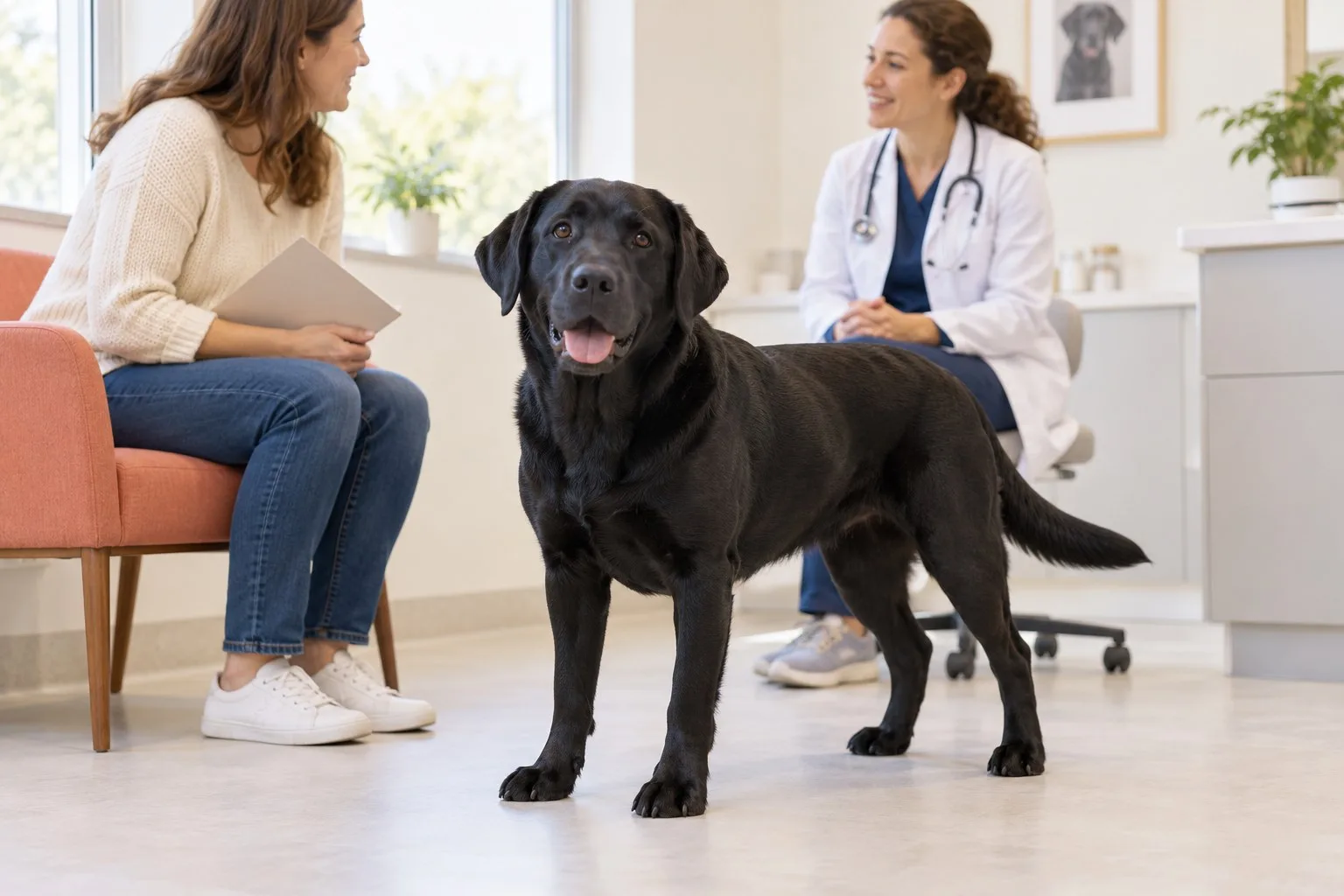
Veterinarian and owner consulting beside a black Labrador-like dog
✓ Policy-first ✓ Independent ✓ Useful checks
Direct answer
Pet insurance may cover an exam fee, exclude it or require an optional benefit. The answer depends on why the visit occurred, whether the underlying accident or illness is eligible and what coverage you selected. A wellness exam is a separate question from a sick-visit examination. Do not assume that paying for tests or treatment also means the insurer will pay the consultation charge.
What to know

Find the line that charges for the examination

Ask the clinic to identify the consultation or examination charge separately from diagnostics, procedures and medications. A bill may also distinguish an emergency consultation, specialist consultation or recheck. Those labels tell you what to ask about; they do not establish insurance eligibility.

If the practice bundles services, request an accurate itemization or explanation. Do not try to manufacture a different billing code. The useful document shows what the veterinarian actually did, why the animal was seen and which amount was charged for that work.

What to know

Use the purpose of the visit

Visit First policy check Next question
New illness or injury Is the underlying event eligible? Is accident/illness exam coverage included or selected?
Follow-up or specialist referral Does the continuing condition remain eligible? Does the exam wording extend to this consultation?
Routine annual examination Is a preventive benefit present? What service, frequency and dollar allowance does it provide?
Initial examination after enrollment Why was the visit performed? Is it routine screening, required enrollment documentation or care for an eligible new problem?
Visit about a prior condition How does the prior-condition clause apply? Does that exclusion also apply to the examination?

Being the “first visit” does not by itself establish payment. An exam needed to document health for enrollment and an exam to treat an eligible injury can have different purposes. Request the exact rule instead of relying on sequence alone.

What to know

A required health record is not a promise to pay its fee

Its pet FAQ separately says records are needed to process claims. Those documentation requirements do not by themselves create an examination benefit.

Before arranging a visit purely to satisfy a records request, ask what existing notes are acceptable, which date range is required and whether a new examination is actually necessary. Then ask a separate payment question: if a new exam is needed, which selected benefit, if any, would reimburse that charge? A requirement to supply information is not the same as an agreement to fund the appointment.

If your veterinarian finds a health concern at that visit, do not treat a later diagnosis as proof that the original examination was preventive or newly covered. Keep the actual reason for the visit and findings accurate. The policy’s timing and history provisions still need to be applied.

This is especially useful for a newly adopted pet whose available paperwork contains vaccination dates but not a complete examination. Obtain the insurer’s specific request before assuming another appointment is necessary; let the veterinarian decide what care the pet needs.

What to know

Three structures you can encounter

Pets Best: its coverage page says many accident-and-illness plans include exam fees, with the option to remove that coverage to lower the premium. Confirm what your selected version contains.

Trupanion: its medical insurance overview lists exam fees among exclusions. A broad medical benefit or direct-vet-payment feature is therefore not evidence that the examination itself is payable.

These are verified product-structure examples, not every plan in the market. Obtain the current offered state documents; a brand-level checkbox is less reliable than the actual selection on your quote.

Claims

Estimate the extra reimbursement, not the full fee

Owner considering documents beside a golden-colored dog and a laptop
Compare the additional premium with the additional eligible reimbursement.

Hypothetical comparison: an exam add-on costs an extra $6 per month, or $72 for a full year. If the only added eligible charge is a $100 examination and 80% is payable with the deductible already satisfied, the extra reimbursement is $80. That leaves an $8 advantage before considering any other changes. With no eligible exam, the extra premium still costs $72.

If the annual deductible has not been met, adding an eligible exam may generate no immediate cash reimbursement, although it may contribute under the policy’s deductible rules. Calculate the change using the same underlying treatment bill with and without the exam benefit. Do not count the cost of diagnostics as extra value supplied by the exam add-on.

Other offers can differ. The illustration is arithmetic for testing your quote, not a fee estimate, forecast or named insurer payout formula.

What to know

If the treatment was paid but the exam was not

Read the explanation of benefits for the examination line. Ask whether it was excluded because the option was absent, the visit was preventive, the underlying condition was excluded, a limit applied or the deductible absorbed the eligible amount. These are different outcomes.

Send the itemized invoice and relevant notes through the insurer’s claim process if documentation is missing. If the selected endorsement appears inconsistent with the decision, quote its wording in your question and keep the written response. Do not assume that a denied exam means the rest of the invoice was evaluated incorrectly.

Evidence

Sources and policy context

These public references support the consumer or veterinary context. Named insurer details were checked in official product materials; the policy offered for your pet and state determines the actual terms.

Next step

Compare Current Pet Insurance Rates

Check current options for your pet and location, then compare the policy details, exclusions, costs, and eligibility before choosing.

Compare the policy before you choose Check the actual offer, exclusions and out-of-pocket terms.
See Rate Options